
Nasal Polyps Treatment in DHA, Lahore
Persistent nasal blockage, reduced sense of smell, or a feeling of constant congestion that won’t clear? Prof. Dr Khalid Cheema, Lahore’s most trusted ENT specialist, offers expert diagnosis and effective treatment for nasal polyps at CENT, DHA Phase 6 from medication to minimally invasive surgery.

Medically Reviewed By
Medically reviewed by Prof. Dr Khalid Cheema, FCPS Professor of ENT Surgery, King Edward Medical University, Lahore. Founder & Chief ENT Surgeon, Center of ENT (CENT). Over 40 years of clinical experience in ENT surgery and diagnostics.
About the Treatment
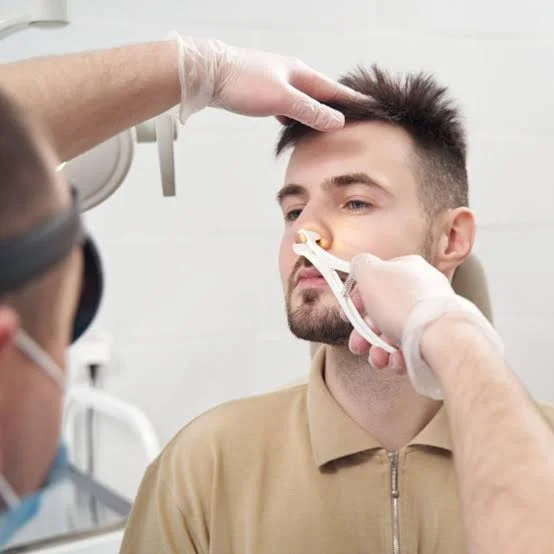
Nasal polyps are soft, non-cancerous growths inside the nasal passages or sinuses that develop from chronic inflammation often linked to allergic rhinitis or chronic sinusitis. Because polyps physically block airflow and mucus drainage, they frequently don’t respond fully to medication alone if they’ve grown large enough. At CENT, Prof. Dr Khalid Cheema confirms the presence and extent of polyps using endoscopy, then builds a treatment plan starting with medication and escalating to minimally invasive surgery only where genuinely needed.
CENT treats patients from across Lahore including DHA, Iqbal Town, Gulberg, and Johar Town many of whom have been managing symptoms for years without realizing polyps, not just allergies, were the underlying cause.

What are Nasal Polyps?
Nasal polyps are teardrop-shaped, soft growths that form on the lining of the nasal passages or sinuses due to chronic inflammation. They are non-cancerous and painless in themselves, but as they grow, they can progressively block the nasal airway and interfere with normal sinus drainage leading to congestion, reduced smell, and repeated sinus infections.
Polyps are closely linked to allergic rhinitis and chronic sinusitis, and often occur alongside one or both conditions, which is why an accurate diagnosis matters treating the polyps alone without addressing the underlying inflammation can lead to recurrence.
Symptoms
Common signs of nasal polyps include:
Causes
The exact cause of nasal polyps isn’t always clear, but they’re strongly associated with:
Diagnosis & Tests
Since symptoms can overlap significantly with sinusitis and allergic rhinitis, confirming the presence and extent of polyps is essential. At CENT, this typically includes:
- Detailed symptom history and physical examination
- Nasal endoscopy to directly visualise and confirm the presence, size, and location of polyps
- CT scan of the paranasal sinuses to assess the full extent of polyps and sinus involvement
- Allergy testing where allergic rhinitis is suspected as a contributing factor
Treatment Options
Medical Management
For smaller polyps or as a first-line approach, medication can shrink polyps and reduce the inflammation driving their growth:
Functional Endoscopic Sinus Surgery (FESS)
Where polyps are large, significantly blocking the airway, or not responding adequately to medication, FESS is a minimally invasive surgical option to remove the polyps and open up the sinus passages performed entirely through the nostrils with no external incisions.
Risks & Complications
As with any ENT procedure, FESS carries a small risk of bleeding, infection, or (rarely) impact on surrounding structures such as the eye or skull base. These risks are discussed in full during consultation, and Prof. Dr Khalid Cheema’s four decades of surgical experience is reflected in his consistently low complication rates. Medical management carries minimal risk in comparison.
Treatment Comparison
| Option | Best For | Recovery | Invasiveness |
|---|---|---|---|
| Medical Management | Mild–moderate cases, allergy-driven sinusitis | No downtime | Non-invasive |
| Balloon Sinuplasty | Moderate blockage not responding to medication | 1–3 days | Minimally invasive |
| FESS (Surgery) | Structural blockage, polyps, severe/recurrent cases | 1–2 weeks | Minimally invasive surgery |
Why Choose Prof. Dr Khalid Cheema / CENT
Prof. Dr Khalid Cheema is Founder and Chief ENT Surgeon of CENT, a Fellow of the College of Physicians & Surgeons Pakistan (FCPS), and Professor of ENT Surgery at King Edward Medical University, Lahore. With over 40 years of experience and five-star patient reviews,he has treated nasal polyps in patients from across Lahore including DHA Phase 6, Iqbal Town, and surrounding areas.
- Endoscopy and CT-based diagnosis to confirm polyps before recommending treatment
- Treatment plans that address underlying allergic/sinus inflammation, not just the polyps themselves
- Minimally invasive FESS with no external incisions
- Same-day appointments available
- Two convenient clinic locations: CENT DHA Phase 6 (main clinic) and CENT Iqbal Town
Consultation & Procedure Fees
Initial consultation fee: 5000 PKR
Diagnostic tests (endoscopy, CT): To be confirmed from the reception
FESS / procedure cost:To be confirmed from the reception
Exact costs depend on the type and severity of hearing loss, and the specific tests or devices required. Your treatment plan and full cost breakdown will be confirmed clearly during your consultation, with no hidden charges.
Cochlear implant procedure cost: To be confirmed from the reception
Pre & Post Procedure Care
Before Your Procedure
After Your Procedure
Recovery Timeline
| Days 1–3 | Mild congestion, light discharge/bleeding, some facial pressure |
| Days 4–7 | Congestion easing, saline rinses continue, avoid strenuous activity |
| Week 2 | Most patients resume normal daily activities; follow-up endoscopy check |
| Weeks 3–4 | Full healing of sinus lining; final assessment of breathing and drainage |
Before & After Results

Related Treatments
- Chronic Sinusitis
- Allergic Rhinitis
- Anosmia (Loss of Smell)
- Nasal Obstruction
- Deviated Nasal Septum / Septoplasty
- Sinus Headache
Reviews
Book Consultation
Don’t let persistent congestion or lost sense of smell go unexplained. Book a consultation with Prof. Dr Khalid Cheema at CENT and find out if nasal polyps are the underlying cause.